







Search Results for: Tigray Conflict
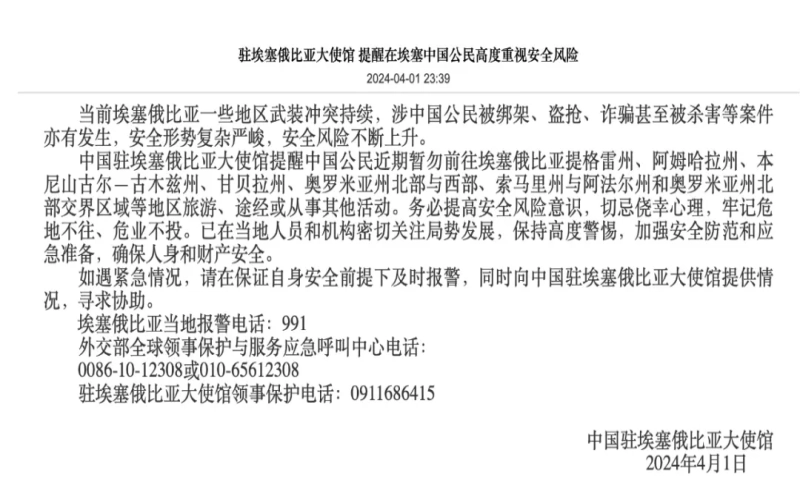
The Chinese Embassy in Ethiopia has issued a safety reminder: temporarily avoid travel to high-risk areas such as Tigray, affecting the coffee trade and tourism.
Recently, the Chinese Embassy in Ethiopia issued a notice advising Chinese citizens to temporarily avoid traveling to several high-risk areas, including Tigray and Amhara regions. The country's protracted civil war and local armed conflicts continue to spread, not only creating security risks but also severely impacting an economy and tourism industry that rely on coffee and agriculture and animal husbandry as pillars. As the recognized birthplace of coffee, Ethiopia's turbulent situation also affects the travel plans of coffee traders and bean hunters. This article outlines the background of the conflict, its impact on the economy and the coffee industry, and reiterates the embassy's safety recommendations, reminding those planning to travel to the country to remain highly vigilant and ensure their personal and property safety. [more…]

U.S. Intervention in Tigray: Peace Deal Implementation Faces Internal and External Challenges, Ethiopia's Coffee Industry Under Pressure
The chairman of Ethiopia's Tigray interim government met with the US special envoy for the Horn of Africa on September 12, and the two sides discussed the difficulties and ways forward in implementing the Pretoria Peace Agreement. The US side expressed support for the Tigray interim government in accelerating the completion of its tasks, while the Tigray side called on the international community to jointly exert pressure to ensure the return of displaced people and ease the humanitarian crisis. However, after the agreement was signed, local violent conflict has still not subsided, divisions within the TPLF have intensified, and the risk of civil war has resurfaced. At the same time, the depreciation of Ethiopia's currency and soaring prices are putting pressure on people's livelihoods, and instability in the northern agricultural areas is gradually spilling over into the southern coffee-producing regions, with exchange rate volatility and rising costs becoming severe challenges facing the country's coffee industry. [more…]

Ethiopia will allow foreign capital to participate in trade.
Recently, according to the local Ethiopian media reporter network, under the leadership of Ethiopian Prime Minister Abiy, the Ethiopian Investment Commission (EIC) has issued a new law that will allow foreign enterprises to participate in import and [more…]
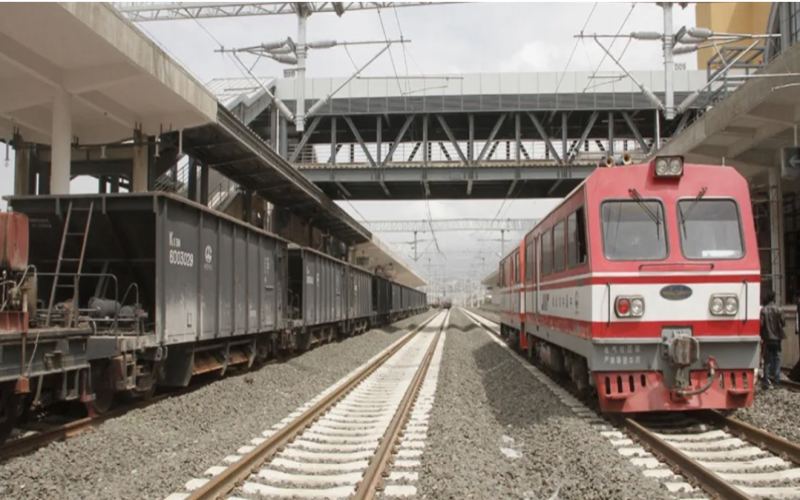
The internal war in Ethiopia has led to problems with coffee transportation, and it is considering using railways for diversion.
Due to the conflict in Ethiopia, there are problems with coffee transportation, and the government considers using railway transportation for diversion. Recently, according to the report of the Ethiopian Reporter Network, the current Ethiopian govern [more…]
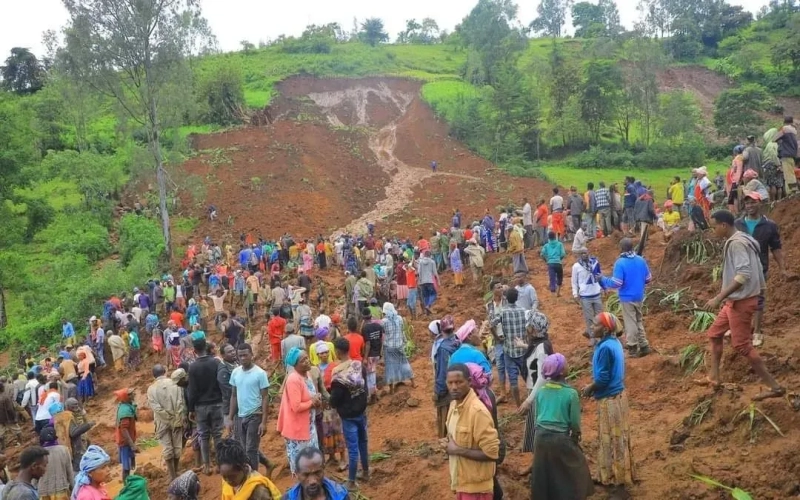
Landslide in Ethiopia's Gofa Zone Kills 229, Coffee-Growing Region Faces Risk of Reduced Output
A severe landslide occurred in the Gofa Zone of southern Ethiopia on the evening of July 21 local time. As of now, 229 deaths have been confirmed, and the casualty toll is feared to rise further. The disaster was triggered by persistent heavy rainfall, and a secondary landslide buried rescue workers. Of particular concern to coffee lovers is that the affected area covers important coffee-producing regions such as Kaffa, Jimma, and Yirgacheffe, where torrential rain and geological disasters are directly threatening the coffee-growing environment and infrastructure. At the same time, the conflict in the north and the impact of the Red Sea crisis on the port of Djibouti have plunged Ethiopia's coffee industry into multiple difficulties. Front Street Coffee will continue to follow the developments and their potential impact on the coffee supply chain. [more…]

Ethiopia Relaxes Foreign Investment Access: Coffee Export and Other Sectors Opened to Foreign Enterprises
The Ethiopian Investment Commission recently issued new regulations allowing foreign companies to engage in import/export, wholesale, and retail trade for the first time, with coffee exports becoming the most closely watched area of liberalization. Previously, these sectors were long restricted by protectionist policies and open only to local investors. Although the new policy sets a relatively high capital threshold, it has already sparked strong interest in the international coffee industry. However, ongoing security conflicts in some parts of the country have also added uncertainty to foreign investment entry. This article outlines the key points of the new regulations, industry reactions, and potential risks, and includes related observations from Front Street Coffee. [more…]
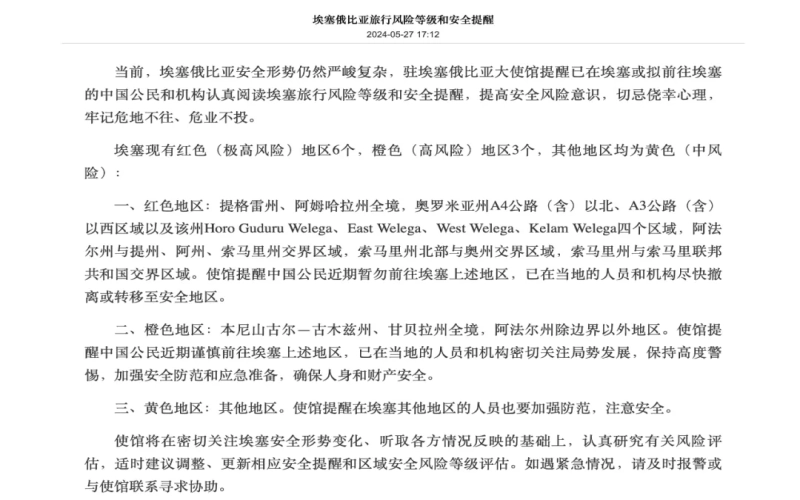
Ethiopia's Worsening Security Situation: Coffee Industry Faces Civil War Shock and Export Test
Ethiopia's security situation has remained tense recently, and the Chinese consulate has issued a travel risk advisory. Several of the country's coffee-producing regions are located in high-risk areas, and clashes between the federal government and local armed groups could deal a severe blow to coffee production, the supply chain, and exports. Although coffee exports hit a record high in the first nine months of this fiscal year, the looming civil war, transport blockades, and the possible cancellation of the Cup of Excellence competition are all casting a shadow over the country's coffee industry. This article will review the current risk areas, the background of the conflict, and its potential impact on the coffee sector. [more…]

2024 the Cup of Excellence COE returns to Ethiopia.
It is known that COE is fully named "Cup of Excellen", which is translated as the Cup of Excellence. It is a coffee event first held in Brazil in 1999 by the non-profit organization the Alliance for Coffee Excellence (ACE), and it is also the first I [more…]

The 2024 Cup of Excellence Returns to Ethiopia: A New Chapter in Coffee Competitions in the Birthplace of Arabica
The Cup of Excellence (COE), as the world's first internet auction platform for award-winning coffee, has been a highly anticipated event in the coffee world since it was founded in Brazil in 1999 by the Alliance for Coffee Excellence. Ethiopia, the birthplace of Arabica coffee, hosted the COE for the first time in 2020 and set a record high of $400.5 per pound in 2022. However, due to the termination of partner funding and the civil war, the 2023 event was forced to be suspended. This year, as the situation has stabilized, the COE has officially returned to Ethiopia, with more than 600 samples arriving at regional warehouses and, for the first time, separate natural and washed categories. The European Commission is selecting international judges, and the industry is looking forward to the emergence of a new batch of high-quality coffee beans. Front Street Coffee will also continue to follow this grand event and bring the latest information to enthusiasts. [more…]
A Complete Analysis of Ethiopian Sidamo Coffee Beans: Tade Estate Flavor Profile and Comparison with Yirgacheffe
Sidamo is a historic specialty coffee region in southern Ethiopia. Its diverse terrain, fertile volcanic soil, and rich native varieties give rise to a unique flavor profile interweaving citrus, floral notes, and wine-like acidity. This article systematically sorts through the core knowledge of Sidamo coffee—from the region's history, geographical environment, and green bean characteristics to its connection with Yirgacheffe—and introduces the cup profile of coffee from Tade Estate. The range of Sidamo and Yirgacheffe products recommended by Front Street Coffee is suitable for various extraction methods such as pour-over and cold brew, helping coffee lovers gain a deeper understanding of the charm of this region hailed as "the representative of African specialty coffee." [more…]

Kuala Lumpur Zus Coffee Store Conflict Incident Follow-up: Customer and Staff Throw Drinks at Each Other, Brand Responds Twice
Recently, a violent conflict between a customer and an employee broke out at a store of the local Malaysian coffee chain Zus Coffee in Kuala Lumpur. A video of about 15 seconds spread rapidly online, showing both sides throwing drinks and objects at each other, with the scene briefly spiraling out of control. The incident sparked various speculations among netizens about the cause of the conflict and also triggered discussions about how brands should protect frontline employees. After the incident, Zus Coffee issued two consecutive statements denying that the employee involved had been fired and saying it had referred the matter to the police. This article will sort through the course of the incident, the reactions of all parties, and the brand's official response. [more…]
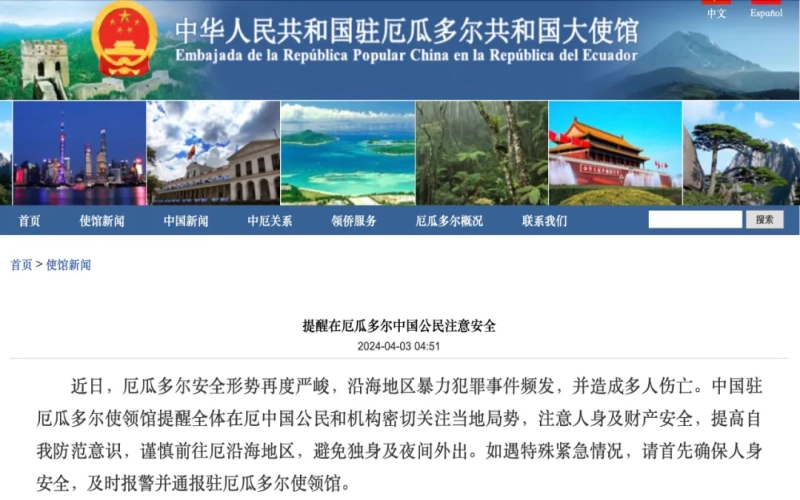
Ecuador's Armed Conflict Coupled with Diplomatic Crisis: Coffee and Tourism Industries Face Chain Reactions
Recently, the Chinese Embassy in Ecuador issued a security alert, noting the frequent violent crimes in the country's coastal areas and advising Chinese citizens and institutions to heighten their vigilance. Behind this warning lies Ecuador's ongoing internal armed conflict and an embassy arrest incident that has sent shockwaves through Latin American diplomacy. As a country dependent on exports of oil, bananas, cocoa, and coffee as well as tourism, Ecuador is facing dual pressures from a deteriorating trade environment and declining willingness among tourists to visit. Although its coffee has gradually risen to prominence in international competitions, attracting many bean hunters to visit, the current situation is undoubtedly casting a shadow over the local coffee industry and tourism economy. [more…]

Colombia's vice president's motorcade was attacked in Cauca Department, and the violent conflict may spread to the country's core coffee-producing region.
On July 10, the vehicle normally used by Colombian Vice President Francia Márquez was shot at in the southwestern region of Cauca. Fortunately, she was not in the vehicle, and no one was injured in the incident. Nevertheless, the attack once again laid bare the long-standing violent conflict and complex security situation in the departments of Cauca and Valle del Cauca. Of particular concern to the coffee industry is that these two departments are not only important coffee-producing regions in Colombia, with a combined annual output of about 140,000 tonnes, but are also home to well-known estates such as Finca El Paraiso, Finca Inmaculada and Finca La Esperanza, making them destinations for many traders and coffee hunters. If the government escalates military operations and triggers large-scale conflict, both local coffee production and export routes via the port of Buenaventura could be severely affected. Front Street Coffee will continue to monitor the subsequent impact of the incident on Colombia's coffee supply chain. [more…]

Guangzhou Milk Tea Shop Conflict Incident: Child Taking a Drink Triggers Physical Altercation Between Parent and Staff, Police Intervene in Investigation
Recently, a video of a conflict that took place in a chain milk tea shop in Yuexiu District, Guangzhou, spread widely on social media and sparked heated discussion among netizens. The video shows that a female customer, after a staff member accused her child of stealing milk tea, lost control of her emotions and committed violent acts against the staff member, including kicking, pulling her hair, and dragging her, and even got into a biting conflict with a security guard who came to stop her, while also holding a knife while waiting for the police. Behind the incident, was it really a child taking someone else's drink without permission, or was there another hidden story? Media outlets including The Paper and Dawan News followed up with reports one after another, and the shop involved and the local police station have intervened. This article will sort out the entire process of the incident, the responses from all parties, and the focal points of public discussion, to reconstruct this milk tea shop dispute that has attracted social attention. [more…]

Truth Behind the Milk Tea Shop Spill Incident Revealed: Delivery Rider's Order Urging Triggers Conflict, Surveillance Footage Exposes Hidden Details
Recently, a conflict between a delivery rider and a staff member at a chain milk tea shop in Shanghai drew widespread attention. Initially, the delivery rider posted a video on social media claiming that a staff member threw milk tea on him after he urged them to hurry with the order, sparking outrage among netizens against the store. However, as surveillance footage from the store was released, the incident took a dramatic turn: the delivery rider, while pressing for the order, took the liberty of rummaging through the counter and made physical contact with the staff, escalating the conflict. The brand said both parties have reached a settlement under police mediation, but the delivery rider later posted an incomplete video and livestreamed, and the brand will reserve the right to pursue legal action. As coffee enthusiasts, we care about the service experience in the beverage industry and also call for a rational view of disputes. Front Street Coffee reminds that communication and respect are the key to resolving conflicts. [more…]

Boycott Wave from the Israeli-Palestinian Conflict Hits Starbucks Malaysia: Losses Exceed 100 Million in Half a Year, Franchisee Issues Urgent Clarification
Since the outbreak of the Israeli-Palestinian conflict, American chain brands have faced waves of boycotts in Muslim-majority regions, with Starbucks bearing the brunt. In Malaysia, a Muslim-majority country, local consumers' boycott of Starbucks has led to a sharp drop in foot traffic. The latest financial report from franchise operator Berjaya Food shows that in the first half of this year, its Starbucks business suffered a massive loss of 87.34 million ringgit (approximately 143 million RMB). To reverse the decline, Berjaya Food has repeatedly stated that Starbucks Malaysia is wholly owned by a local listed company, with employees almost entirely local and mostly Muslim, in an attempt to distance itself from the US headquarters. However, the boycott continues, even affecting employees' livelihoods and stock performance. How this situation will unfold and whether Starbucks can regain local consumers' trust is worth watching. [more…]
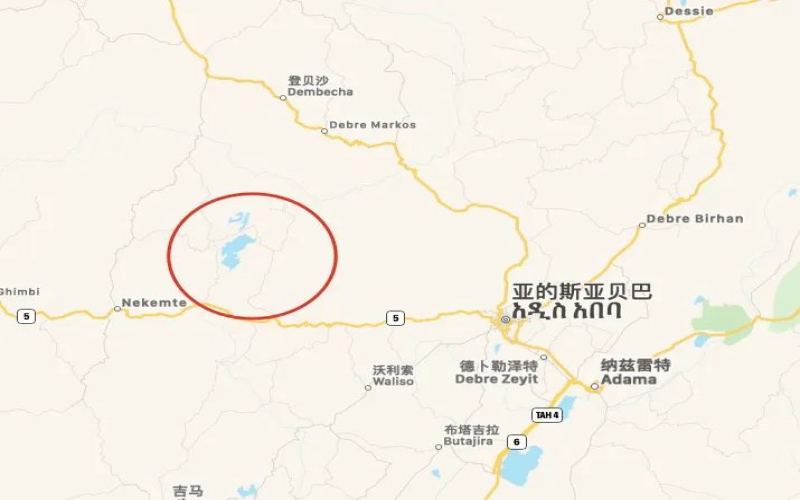
Ethiopian Coffee Exports Face $1.4 Billion Loss: Caught Between Security Conflict and New EU Regulations
The Ethiopian coffee industry is facing severe challenges. On one hand, security conflicts have once again broken out in the Horo Guduru region of Kiremu district in Oromia, resulting in at least 6 deaths; this area is home to Lekanti, the country's main commercial coffee-producing region, and the ongoing conflict continues to disrupt coffee production. On the other hand, the EU Deforestation Regulation will take effect at the end of 2024, and because Ethiopian coffee will struggle to meet compliance requirements, it could face export economic losses of up to US$1.4 billion. Although Ethiopia's coffee export value hit a record in August this year, the dual pressure of the security situation and new international trade rules has left the outlook for this major African coffee country full of uncertainty. [more…]
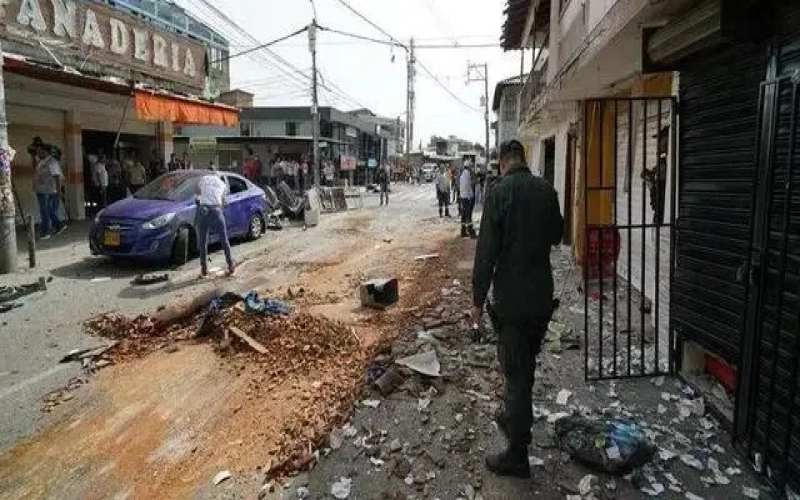
Conflict between the Colombian government and two major rebel groups escalates, affecting key coffee-producing regions
On August 5, Colombia's Ministry of Defense announced the resumption of military operations against the anti-government armed group the National Liberation Army (ELN), and the ceasefire agreement will not be extended after it expires. At the same time, government forces are also fully committed to striking the dissident branch of the former Revolutionary Armed Forces of Colombia (FARC), the Central General Staff. The southwestern and northeastern provinces where these two major armed groups are active happen to be important coffee-producing regions in Colombia. The civil conflict may severely impact coffee cultivation, infrastructure, and exports, thereby driving up international coffee prices. [more…]
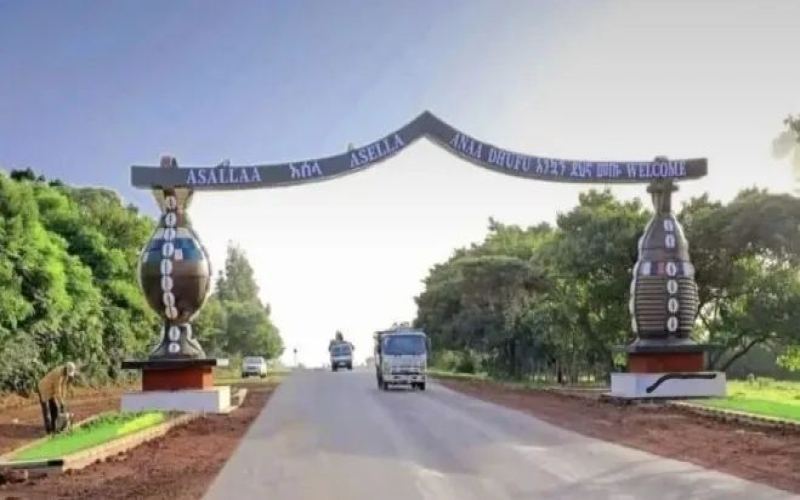
Ethiopian armed conflict spreads to western coffee regions, hidden concerns emerge behind record exports
Oromia, Ethiopia, has recently seen a string of kidnappings and armed attacks, and the conflict has spread to the Lekanti coffee-producing area in the west and the town of Asela near the Sidama-producing area. Meanwhile, the country's coffee exports in August hit a record high, with export value rising sharply year on year. However, multiple factors—continued conflict, currency depreciation, and the impending implementation of the EU's deforestation regulation—have filled the prospects for Ethiopia's coffee industry with uncertainty. This article reviews the course of events and the impact on the industry for coffee lovers' reference. [more…]

The reported employee conflict incident at Mixue Bingcheng is rumored to be false; the store involved cannot be found at the stated location.
Recently, a rumor circulated online about a fierce conflict between a Mixue Bingcheng employee and the company's HR, involving multiple allegations such as being refused a late clock-in makeup, insulting HR staff, smashing up a store, canceling the cashier system, and even misappropriating public funds, which quickly sparked heated discussion among netizens. However, after verification by media outlets such as Red Star News and Southern Metropolis Daily, the rumor was confirmed to be false; the original blogger has deleted the related content, and the so-called involved store cannot be found on maps. This article sorts out the course of the incident and the responses from all parties, reconstructing the ins and outs of this online false alarm. [more…]